


The fauna of the Tibetan plateau at 1:20
Kiang, bharal and Przewalski’s gazelle: three animals from the roof of the world, and why they form a series of their own in the collection.

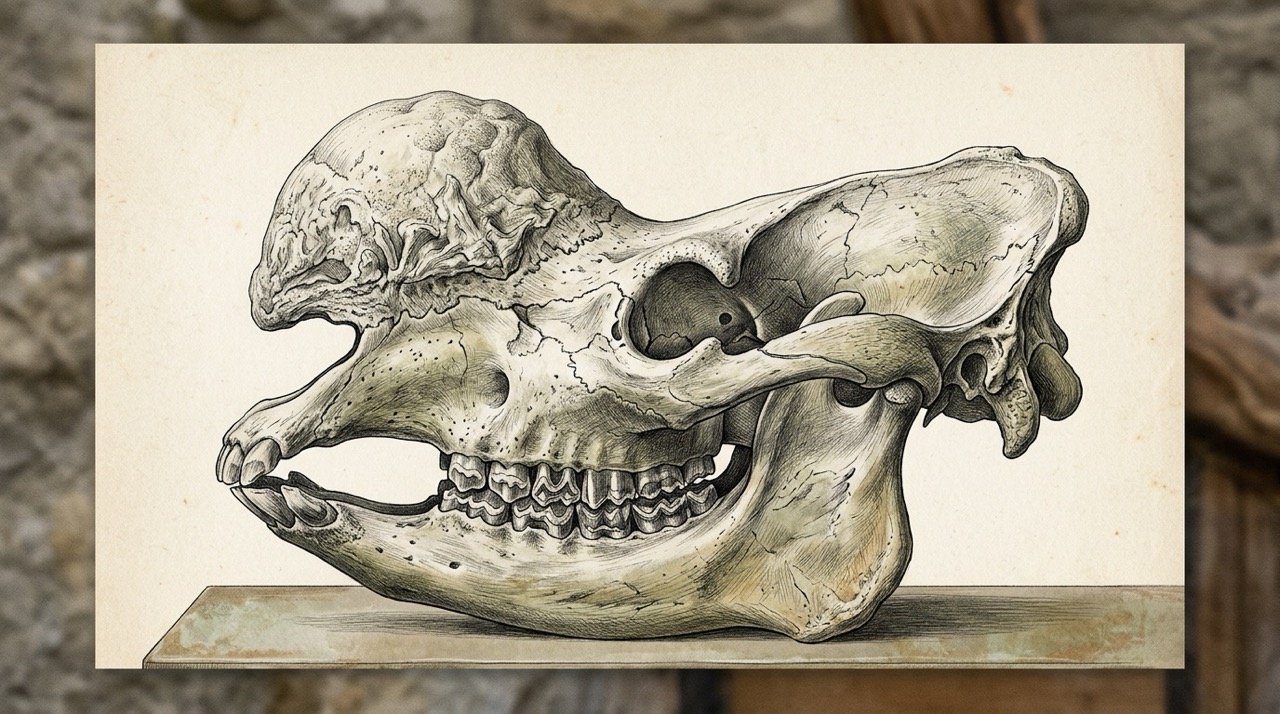
Few extinct animals are drawn with as much confidence, and as little evidence, as Elasmotherium sibiricum. Popular images give it a horn as long as a person is tall, a shaggy coat and a hump. Some of that rests on bone and some of it does not, and a reconstruction has to decide where the line falls.
Elasmotherium was a rhinoceros of the open steppe, roughly the weight of a mammoth: estimates cluster around three and a half to four tonnes. Until recently it was thought to have died out some 200,000 years ago. In 2019 a team that radiocarbon-dated 23 specimens showed that it survived in Eastern Europe and Central Asia until at least 39,000 years ago, which means it shared the steppe with modern humans.
The same study recovered ancient DNA. Elasmotherium was not a giant cousin of the woolly rhinoceros: its lineage had split from the one leading to living rhinos more than 40 million years earlier. It was the last survivor of a branch that had been evolving on its own since the Eocene.
Its teeth are the clearest evidence of how it lived. They are tall, kept growing throughout life, and carry enamel folded into intricate plates, the feature behind the genus name, from the Greek for “thin plate”. They are the teeth of a grazer of tough, dry grasses. Isotope analysis points the same way, and the researchers suggest that so specialised a diet helped push the animal to extinction when the steppe changed.
The skull carries a feature no other rhinoceros has: a huge bony dome on the forehead. It has long been read as the base of a single enormous horn, and that is where the name “Siberian unicorn” comes from.
The difficulty is that horns are made of keratin, which almost never fossilises. No Elasmotherium horn has ever been found. Everything about it, from length to shape and curvature, is inferred from the bone underneath, and estimates range from modest to well over a metre. More recent work has even questioned whether the dome supported a large horn at all.
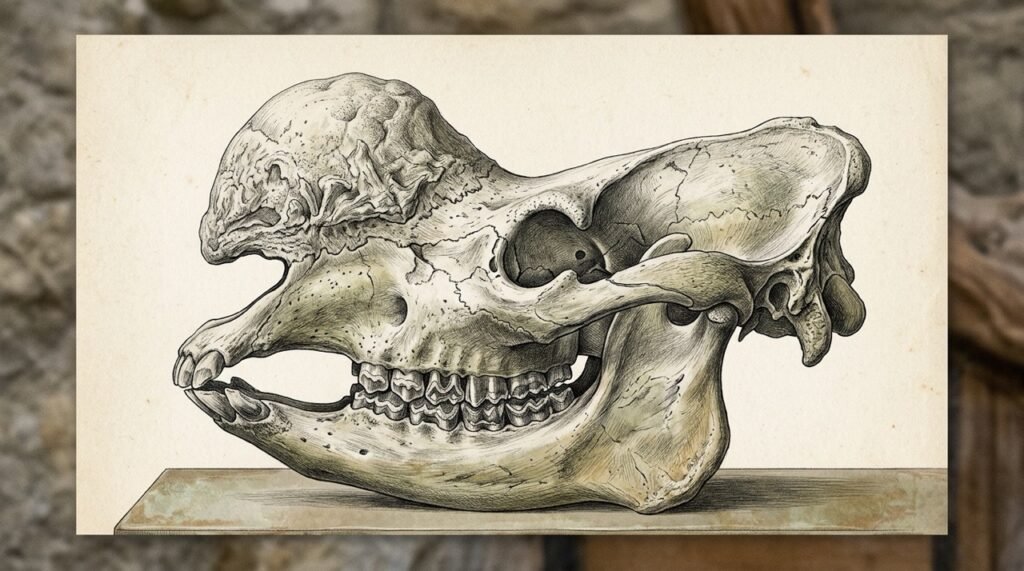
It is the least constrained part of the animal, and the one most reconstructions exaggerate, because a giant horn is what makes Elasmotherium spectacular.
The vertebrae over the shoulders carry tall spines, which is why most reconstructions give Elasmotherium a hump, as in the woolly rhinoceros. That much is anchored in the skeleton.
The coat is a different matter. The woolly rhinoceros is known from frozen carcasses with skin and hair still attached; Elasmotherium is not. A thick coat is a reasonable assumption for an animal of the cold steppe, but it remains an assumption.
The Signatu Studio Elasmotherium takes a deliberately conservative position on the horn, rather than the metre-long spike of popular imagery. At 29 centimetres long, the 1:20 replica is one of the largest single figures in the collection.
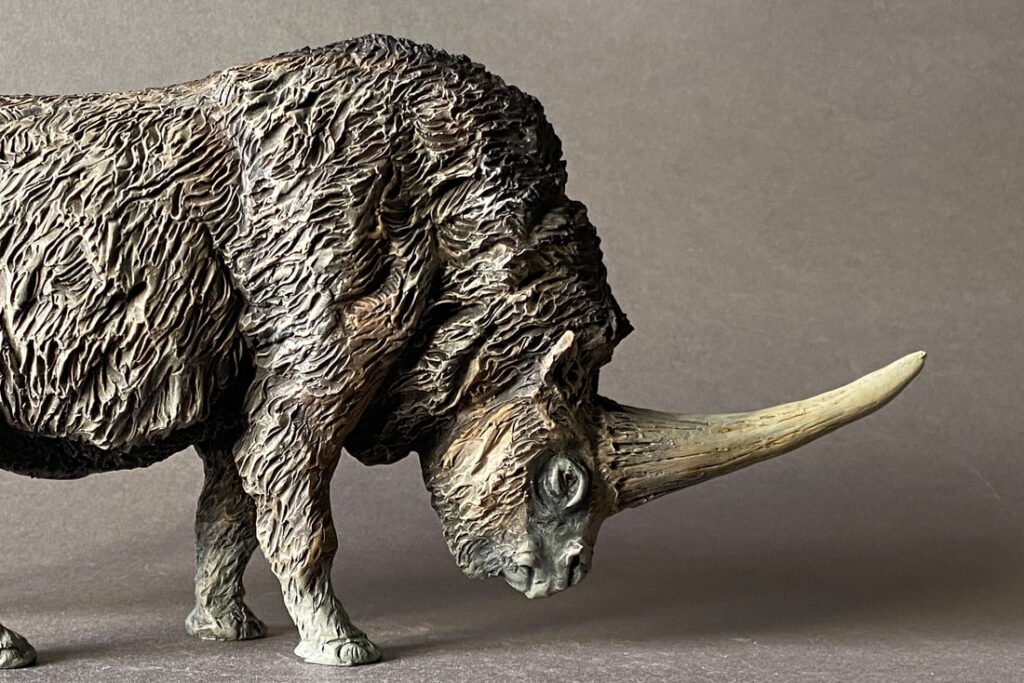
When you compare reconstructions of an extinct animal, a useful question is which parts are bone and which are paint. With Elasmotherium, the most famous part of the animal is almost entirely paint.
Kiang, bharal and Przewalski’s gazelle: three animals from the roof of the world, and why they form a series of their own in the collection.

Six stages, none of them mechanised: how a replica goes from a study of the animal to a hand-painted resin cast, and how to look after one.